

Key Takeaways
- Partial dentures can fill gaps left by missing front teeth and help restore some chewing function.
- The process may include a consultation, impressions or scans, a custom appliance, and adjustments for comfort.
- Some people notice temporary speech changes while they adjust to a new appliance.
- Soft foods can make the first few days of adjustment more comfortable.
- Daily cleaning with a soft brush and an appliance-safe cleanser supports the appliance and your oral health.
A missing front tooth can affect more than your smile. Biting into certain foods may feel different, and you may notice the gap when you speak, eat, or look in the mirror.
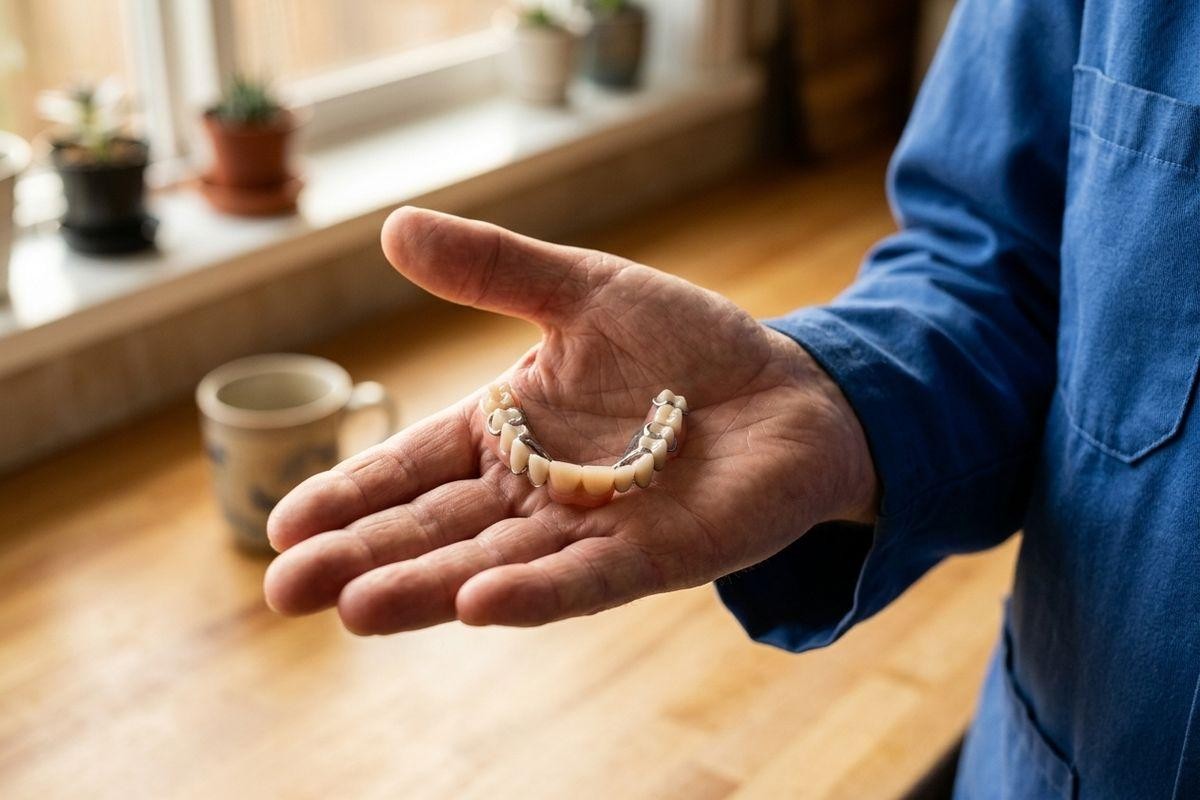
A partial denture is a removable appliance that replaces one or more missing teeth. It rests on the gums and is held in place by nearby teeth, often with clasps or other attachments. Our team at Vita Dental Wellness can help you compare your options when you decide to replace a missing tooth.
The Basics of Partial Dentures for Front Teeth
How They Look & Feel
When you lose a front tooth, a removable partial denture can provide a practical way to replace it. The appliance may use an acrylic base or a metal framework that rests on your gums.
- The lab carefully matches the shade of your surrounding natural teeth for a natural-looking cosmetic result.
- The appliance is held in place by nearby teeth, often with clasps or other attachments.
- The replacement tooth fills the open space and restores the appearance of your smile.
When to Discuss a Partial Denture
A missing front tooth can affect speech, eating, and the way your bite feels. These changes do not automatically mean a partial denture is the only option, but they are worth discussing with your dentist.
- A missing front tooth may affect your speech or how you feel about your smile.
- Biting into certain foods becomes more difficult.
- Nearby teeth may gradually drift into the gap, changing how your bite feels.
What to Expect When Getting a Partial Denture
The Initial Consultation
Your consultation starts with an assessment to evaluate your mouth and review your overall oral health. Your dentist examines the space, surrounding teeth, and bite before discussing whether a partial denture is a suitable option.
- Your dentist creates a treatment plan based on your oral health, the missing tooth or teeth, your bite, and your goals.
- Your dentist can explain how a partial denture compares with other tooth-replacement options.
- Your dentist discusses the timeline and steps for your new appliance.
The Impressions & Design Phase
The team needs accurate measurements to build an appliance that fits your mouth. They may take traditional impressions or digital scans of the area being restored, along with the opposing teeth, to help design the right shape.
- The team records the shade of your natural teeth so the replacement can blend with your smile.
- The dental lab fabricates your appliance, and the office schedules a fitting once it is ready.
- Your next visit is scheduled for the fitting and any initial adjustments.
The Final Fit & Minor Tweaks
At the fitting appointment, you try the appliance in place. Your dentist checks how it rests against your gums, how it affects your bite, and whether any areas need adjustment.
- Small adjustments can improve the way your bite feels when you close your jaw.
- The team checks the clasps or other attachments to avoid unnecessary pressure on your remaining teeth.
- Follow-up visits may be recommended as your mouth adapts to the appliance.

What to Expect in the First Few Weeks
Normal Sensations & Mild Soreness
Your mouth may need time to adjust to a new appliance resting on your gums. Some people notice increased saliva at first.
- Your cheeks and tongue may feel slightly different while you adjust to the appliance.
- Some mild soreness can occur during the early adjustment period, but tell the team if you notice persistent sore spots or unusual bleeding gums.
- Many people find the appliance becomes easier to wear as they practise and adjust.
Speech & Pronunciation Changes
A new appliance can temporarily affect tongue placement and pronunciation, especially for sounds such as “s” and “th”.
- Some words may sound different at first, and a slight lisp is possible.
- Reading aloud can help you practise new speech patterns at home.
- Pronunciation usually becomes easier as you practise and adjust.
Simple Diet Tips for Your New Smile
Foods to Enjoy at First
Eating may take some practice while you adjust to the new appliance. Start by easing into chewing and follow any instructions your dentist gives you.
- Start with soft foods like mashed potatoes or yogurt to minimize chewing.
- Cut meals into small pieces for easier bites and less strain on your jaw.
- Chew carefully on both sides when comfortable, and follow your dentist’s advice if the appliance feels unstable.
Foods to Limit While You Adjust
Sticky or very hard foods can put stress on the appliance or its attachments. Ask your dentist which foods to limit while you adjust.
- Sticky foods like caramel may pull on the appliance or its attachments.
- Tough foods can place extra stress on your gum tissue while your mouth adapts.
- Very hard foods may put stress on the appliance, so cut them into smaller pieces or choose softer options.
Simple Care & Maintenance Steps
Daily Care Habits
Cleaning your appliance regularly helps keep it fresh and supports the health of your natural teeth and gums. Follow the cleaning instructions provided for your specific appliance.
- Clean the appliance daily with a soft brush and an appliance-safe cleanser, following your dentist’s instructions.
- Rinse the appliance with water after meals to remove trapped food particles.
- Visit your dentist for routine exams and professional cleanings.
Safe Storage Overnight
Many removable partial dentures are removed at night, but follow your dentist’s instructions for your specific appliance.
- Remove the appliance at night if your dentist recommends it.
- Store the appliance as directed, often in water or a denture-soaking solution, and avoid hot water.
- Handle the appliance gently over a folded towel to reduce damage if it slips.
If you’re considering a partial denture for a missing front tooth, contact Vita Dental Wellness to discuss your options and book a consultation. Our team can explain how a custom appliance may fit into your smile and daily routine.