


Key Takeaways
- Bruxism is the term for grinding or clenching your teeth, and most people don’t notice they do it.
- A sore jaw in the morning, dull headaches, and sensitive teeth are common signs.
- Several signs together are a good reason to book a dental visit.
- Your dental team can check for worn teeth and tender jaw muscles during a regular checkup.
- A night guard and simple bedtime habits can help protect your teeth while you sleep.
You wake up with a tight jaw, a dull ache in your head, and no clear reason why. Maybe your partner has mentioned a scraping sound coming from your side of the bed. These small clues can point to teeth grinding, and the team at Vita Dental Wellness in Chilliwack sees it in patients of all ages, from young kids to adults working long shifts.
You can often tell you grind your teeth at night if you wake up with a sore jaw, get dull headaches, notice sensitive or worn teeth, or hear from someone that you grind in your sleep. Preventive checkups and cleanings at Vita Dental Wellness give the team a chance to spot early wear on your teeth and talk with you about it.
What Is Bruxism?
Bruxism is the simple term for grinding or clenching your teeth. Grinding means your teeth slide against each other. Clenching means you bite down and hold it. Most people don’t notice they do either one.
Why It’s Hard to Catch on Your Own
Grinding tends to happen in short bursts while you sleep, so you’re not awake to feel it. It also doesn’t always happen every night.
A quiet night doesn’t rule it out, either, since clenching can be completely silent.
Jaw Tension During the Day
Clenching can happen while you’re awake as well. You might catch your jaw tight while you sit in traffic, finish a long shift on a job site, or work through a busy, stressful day. Watch for that tight feeling so you can spot the habit when it shows up.
Common Signs You Grind Your Teeth at Night
Signs You May Feel
Some clues show up in your own body, often first thing in the morning. Watch for these signs:
- Your jaw feels sore or tight when you wake up.
- You get dull headaches that feel like tension headaches.
- Your teeth feel sensitive to hot, cold, or sweet foods.
Other Signs to Watch For
Other clues come from the people around you or from changes that are easy to brush off. Look for these signs:
- A partner or family member hears grinding sounds at night.
- Your teeth look worn, chipped, or cracked.
- You have earaches, neck pain, or broken sleep.
When Signs Add Up
One sign on its own doesn’t tell you much, but when you notice several signs together, it’s worth booking a dental visit. The team can take a closer look and help you figure out what’s going on.
How Does a Dentist Check If You Grind Your Teeth?
A dental check for grinding is quick and simple, and here’s what the dentist looks at during your visit:
- Worn, chipped, or cracked teeth.
- Tenderness in your jaw muscles, which the dentist checks by pressing gently.
- If grinding seems linked to snoring or pauses in your breathing at night, the dentist may suggest a sleep study.
Why Regular Checkups Help
Hygienists see your teeth up close at every cleaning, so they often spot early wear first. Over time, your Chilliwack dentist can compare each visit and track small changes before they turn into chips or cracks you can feel with your tongue.
What If Your Child Grinds Their Teeth at Night?
Hearing your child grind in the next room can feel worrying. The good news is that kids often outgrow it over time.
Keep an eye out for jaw soreness or worn teeth, and mention what you’ve heard at your child’s next checkup. The team at Vita Dental Wellness sees patients of all ages, so you can book your child’s checkup right alongside your own.
How Can You Protect Your Teeth at Night?
Night Guards & Your Dental Team
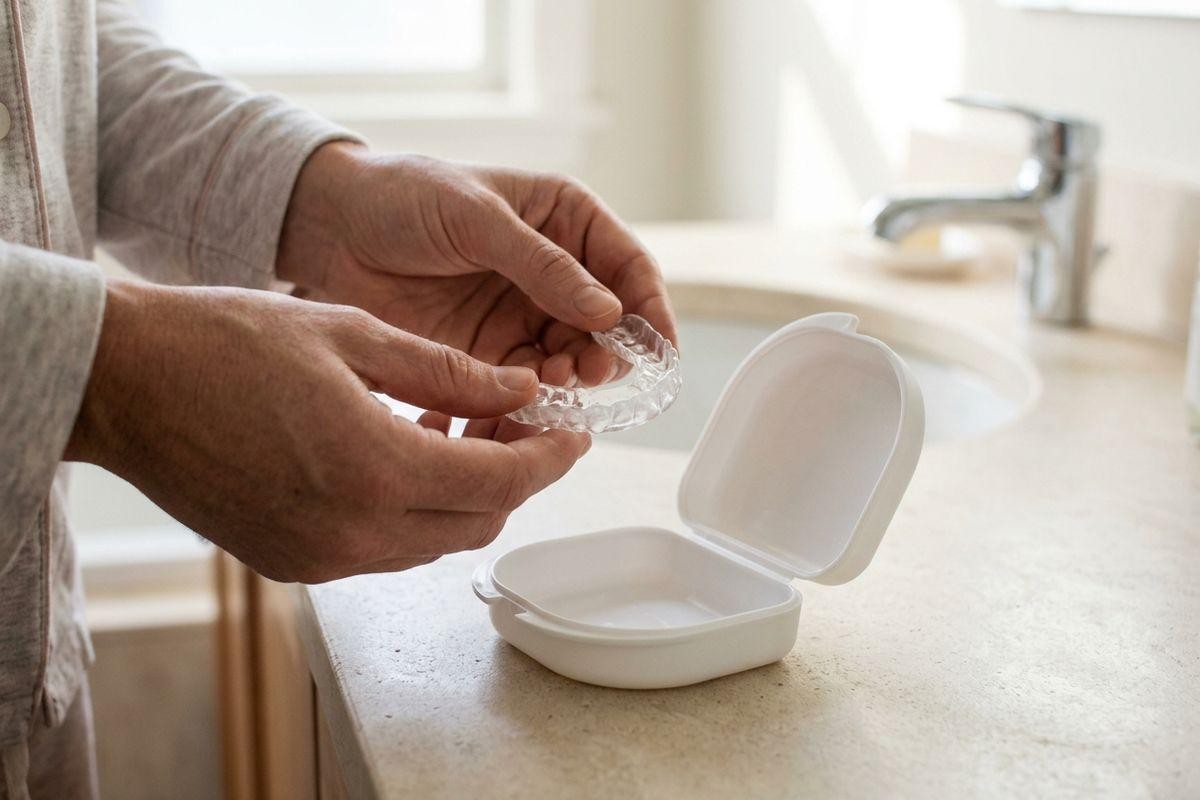
A night guard is worn over your teeth while you sleep to help protect them from grinding and clenching.
Ask the team at Vita Dental Wellness whether a custom night guard is right for you. Cost can vary, so the team can explain what to expect based on your needs.
Simple Habits to Try at Home
Small changes at home can support your teeth, too, so here are a few habits to try:
- Relax with breathing exercises, calm music, or regular exercise.
- Keep a steady bedtime in a dark, quiet room.
- Cut back on alcohol and caffeine, and skip smoking.
When to Book a Visit Sooner
Some signs call for a visit before your next regular checkup. Book sooner if you notice any of the following:
- You feel sharp or lasting pain in your jaw or teeth.
- Your jaw locks or gets stuck.
- Your jaw clicks painfully, or eating becomes hard.
- You spot new chips, cracks, or worn spots on your teeth.
Book a Visit With Your Chilliwack Dentist
A sore jaw, a dull morning headache, or a comment from your partner can all be clues worth checking. The caring team at Vita Dental Wellness listens to your concerns, explains what they see in plain language, and helps you choose a next step that fits your life. Book a visit today to get answers for you and your whole family.